

Everything Your Need to Know About Introducing Solids
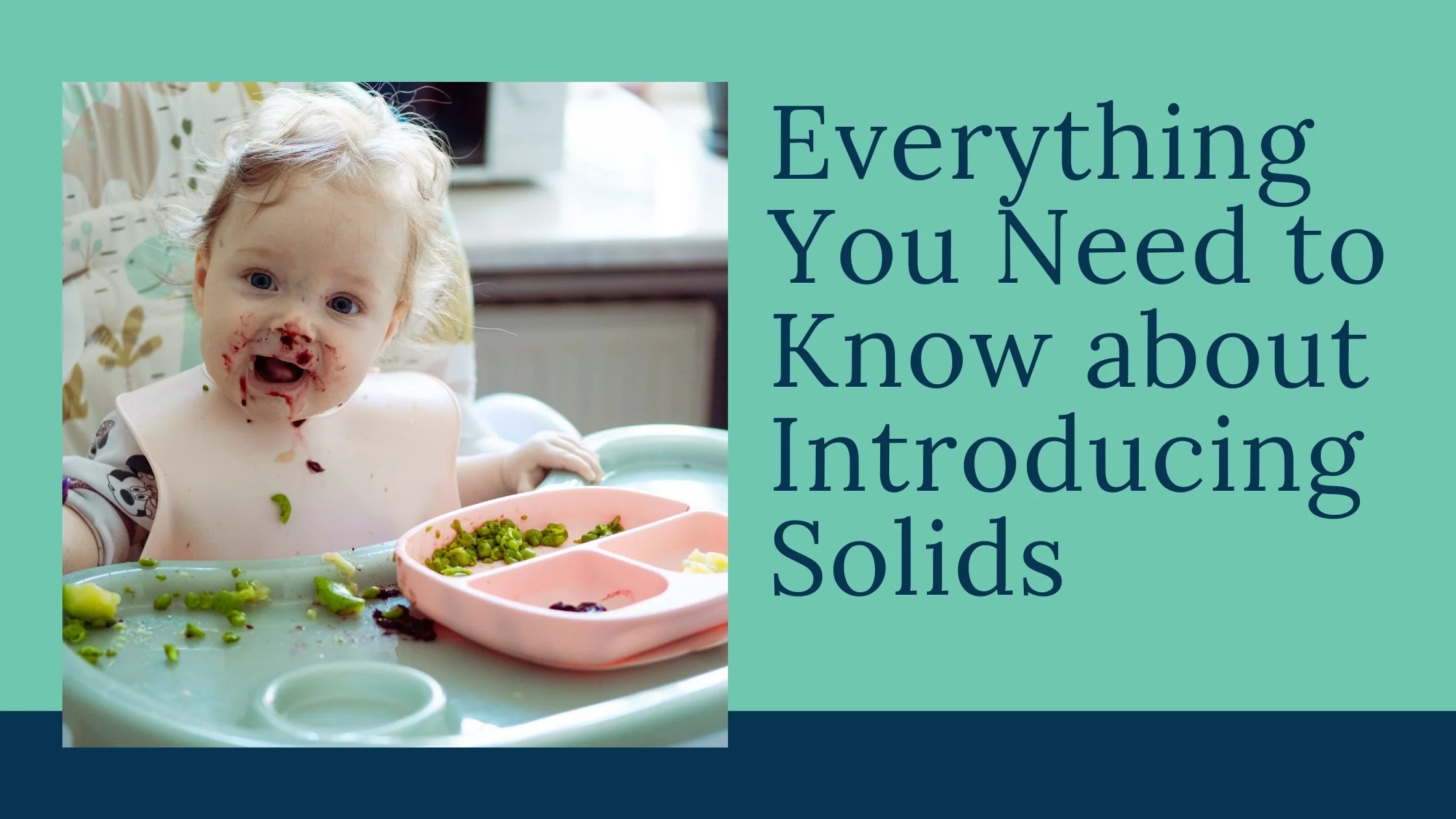
You can have just mastered feeding your baby and now you have to introduce solids! For many parents this is an exciting time, but it can also feel scary. After all, this is a big milestone and if this is your first baby you may not know what to expect. There can be so many questions: When to start? What foods to start with? Is Baby Led Weaning really the best choice? These are good questions and we are here to help!
One of the first things you should do is make sure you are getting your information from reliable, evidence based sources. That means close the social media apps and walk away slowly. Unfortunately, while there can be some amazing information available on these apps, there is also a lot of misinformation that is confusing, contradictory, or sometimes even dangerous. That isn’t to say you can never find information in these places, you can! It’s just not where we recommend starting your journey.
One of the absolute best sources for evidence based information here in Canada is the Canadian Paediatric Society. Their website is comprehensive and based on current best practices, something that is extra important when introducing solids.
So how do you know when your baby is ready for solids?
The main criteria for introducing solids according to the Canadian Pediatric Society (CPS) are as follows:
● Can sit up without support, lean forward, and have good control of their neck muscles.
● Ability to pick up food and try to put it in their mouth.
● Hold food in their mouth without pushing it out with their tongue right away. ● Show interest in food when others are eating.
● Open their mouth when they see food coming their way.
● Can let you know they don’t want food by leaning back or turning their head away.
● 6 months of age - waiting until after your baby is 6 months old may increase their risk of iron deficiency
What foods to start with?
This is always a question we get asked and its no wonder! Recommendations around solids changes more frequently than many of the other recommendations for infant. It has changed since we were babies and even over the last 15 years we have seen significant changes to the recommendations of what foods should be first, how they should be introduced, information on high-risk allergen foods, and even the age that is best. So here are the current best practice recommendations around baby’s first foods:
● Foods that contain iron - meat, egg, fish, tofu, legumes or iron fortified cereals
● Grains - whole grain pasta rice and bread, iron fortified cereals
● Vegetables - pureed, mashed or soft vegetables
● Fruits - pureed, mashed or softened fruits, peeled and diced fruit in cans (not with added syrup)
● Dairy - full fat dairy products, yogurt and cheese - you can also introduce cow’s milk between 9-12 months and the recommendation is to introduce it in a cup instead of a bottle to support milestones
What should I not feed my baby?
● Babies should not be fed honey before they are one years old due to the risk of infant botulism
● Avoid juice or any other surgery drinks/foods
Sometimes seeing examples is most helpful, so here is a resource we often share with parents.
What about baby-led weaning?
Baby-led weaning is an approach to introducing solid foods that skips purees and lets babies feed themselves similar foods to the rest of the family. This can be especially beneficial for the family unit as babies can eat what everyone else is eating (within reason of course!). Often this saves money and time and helps with developing small motor skills.
With baby led weaning, parents introduce foods without mashing, pureeing, or smashing the foods. Best practice is to either make the food the size of a pinky finger or french fry, or to cut it up quite small, like cutting a blueberry into quarters. The point is to give baby something to grab onto without creating a choking hazard. Especially with round foods, it is important to cut in half or quarters so that the food can’t block the airway.
At first, babies who start solids using this approach may not actually get all that much food into their mouths. That’s okay! It is as much about exploring texture and the process of eating as it is about nutrition. Eventually, your baby will get better at the hand-eye coordination needed for self-feeding and they will get excited about trying new things.
Offering water to Babies:
Water is safe to begin introducing at 6 months old. The main thing to remember is that it is not the baby's main form of hydration - that still comes from breastmilk or formula. It is also important to offer it in a cup with or without a straw and not a bottle. Offering it alongside the meal is often the best choice. While it is safe to introduce water at this stage, not all babies are interested in drinking from a cup or straw just yet, and they may not drink a large amount of water. That’s okay! If you are worried about hydration, it is always best to check in with your little one’s doctor.
A note about choking
We always recommend that parents take a first aid and CPR course before having a baby, because it is important to know what to do if your baby chokes. And while they can choke on breastmilk or formula too, the risk definitely increases once your baby is eating solids. However, it is also important for parents to know that gagging and choking are two very different things that can, sometimes, look very similar. In babies and toddlers the gag reflex is found much further forward in the mouth than it is for older children or adults. There is a reason for that! It’s a developmental means of protecting your baby from blocking their airway and choking. So when starting solids, many babies will gag, often quite dramatically, as they get used to moving solid foods past their gag reflex. This is not the same thing as choking. In fact, a baby who is choking will generally make no sound at all. That’s why is is so important to always monitor your baby while eating.
You may have heard the phrase “food before one is just for fun”. That is because babies still get the majority of their calories from breastmilk and formula until they are a year old. Obviously their nutritional needs increase over that time, so what they eat at six months old is very different than when they are eleven months old. Introducing solids is all about discovery and letting babies become comfortable with this new adventure!
Have fun and be prepared for the mess!